
FUKUO (Tumblr Theme Development & Web Design)
A portfolio website created on microblogging and social networking called Tumblr.
Project type
Templates, Blogging
Technology
HTML, SCSS, JavaScript,
Tumblr Template Language (TTL)
Year
2012–Present
My Role
Frontend Developer, UI Designer,
Content Creator
Team
Solo project
Overview
FUKUO started in 2012 as a personal project;
a Tumblr blog where a self-taught developer shared free themes with anyone who wanted them.
Over a decade later, it’s grown into one of the more recognizable names in the Tumblr theme-making community, with 100,000+ total installations across themes
Each theme is built from scratch using HTML, CSS/SCSS, and JavaScript, tailored to Tumblr’s own template API. The themes cover a range of use cases — from minimal writing-focused layouts to grid-based photoblogs — and are designed to be highly customizable without requiring the user to touch any code.
Beyond theme releases, FUKUO has served as a learning journal: a place to share tutorials, programming tips, and the occasional UI concept, including a Figma mockup exploring what a creator monetization feature on Tumblr might look like. Commissions for custom themes are occasionally taken for users who need something more tailored.
What started as trial-and-error became a long-running side project that helped shape the skills I now use professionally — translating design into code, building with reusability in mind, and making interfaces that work for people regardless of their technical background.
Goals
FUKUO wasn’t built around a client brief or product roadmap — the goals evolved organically over time, but a few consistent ones drove the work:
- To design and release free, polished Tumblr themes accessible to anyone, regardless of technical ability.
- To build themes that are deeply customizable through Tumblr’s built-in settings, without users needing to edit code directly.
- To cover a wide range of blog types — writing-heavy, photo-heavy, portfolio-style — so there’s a theme for most use cases.
- To document the process: sharing tutorials, tips, and resources as both a contribution to the community and a personal learning record.
- To improve as a frontend developer through real, shipped, publicly used work — outside of any professional obligation.
Challenges
Platform constraints
Tumblr themes are built within the boundaries of Tumblr’s own template language and API, which limits what’s possible compared to standard web development. Features that would be straightforward in a normal frontend environment often required creative workarounds within Tumblr’s system.
Long-term maintenance
Themes released in 2012 still have active users today. Keeping them functional through Tumblr’s own platform updates — including the shift to its New Post Format (NPF) — meant revisiting and sometimes fully re-coding older themes years after their initial release.
No roadmap, no deadline
As a solo side project, the hardest challenge was self-direction: deciding what to build next, when to refactor vs. release something new, and how to balance FUKUO with professional work and freelance commitments over 10+ years.
Scale
100k+
Total theme installations across the Tumblr community
Output
5
Public themes released, covering writing, photo, and portfolio use cases
Previously released 20+ themes. These projects have since been discontinued and are no longer maintained because they no longer meet my current standards for design, usability, and overall quality.
Longevity
13yr
Active side project, running since 2012 alongside professional work
Featured Works
My work for the Tumblr templates ranging from free and premium. Some of my themes and pages are totally free, and you can use them as many times as you like!
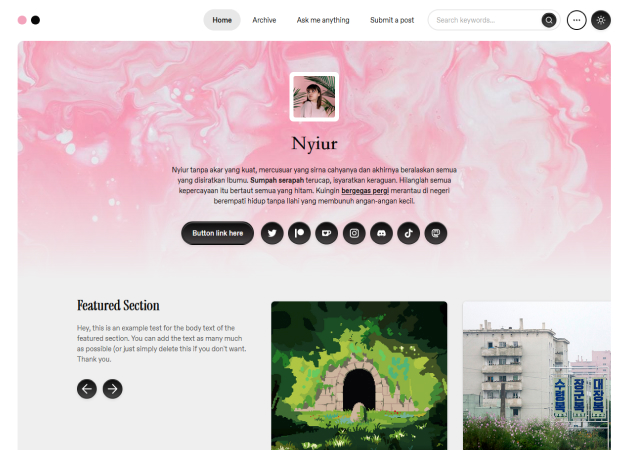
Nyiur
Built for people who write. Nyiur keeps the focus on your words with a clean header layout, carefully chosen typography, and nothing to get in the way. A full redesign of the 2016 original — same name, significantly better everything.
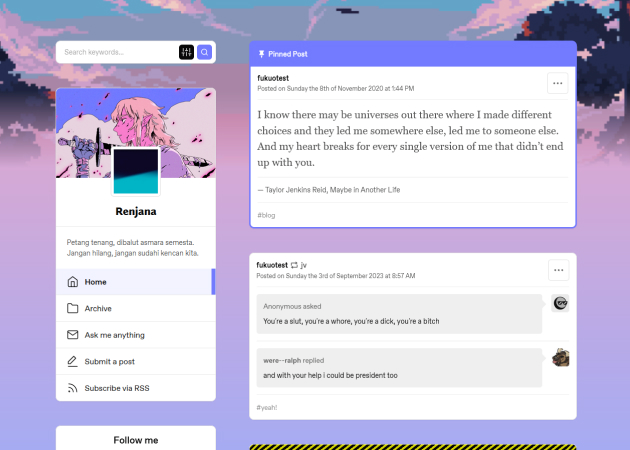
Renjana
Feels like home. Renjana mirrors the look of the Tumblr dashboard and syncs with your global appearance settings, so it blends right into the platform you already use.
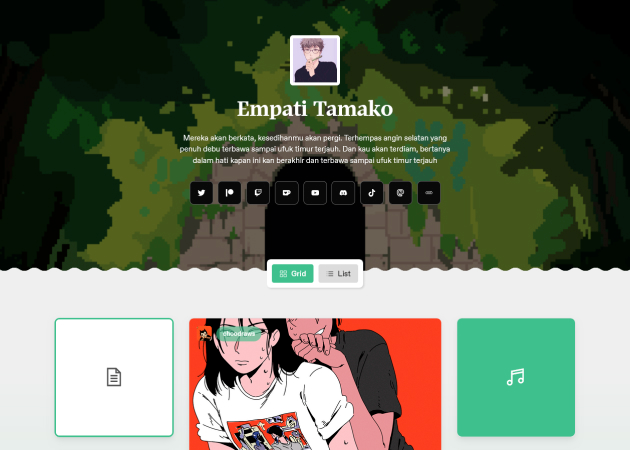
Empati Tamako
Made for photos, ready for portfolios. Posts are displayed at a fixed width and height so everything sits flush in the grid — no awkward crops, no mismatched sizes. Toggle between grid and list layouts depending on your mood.
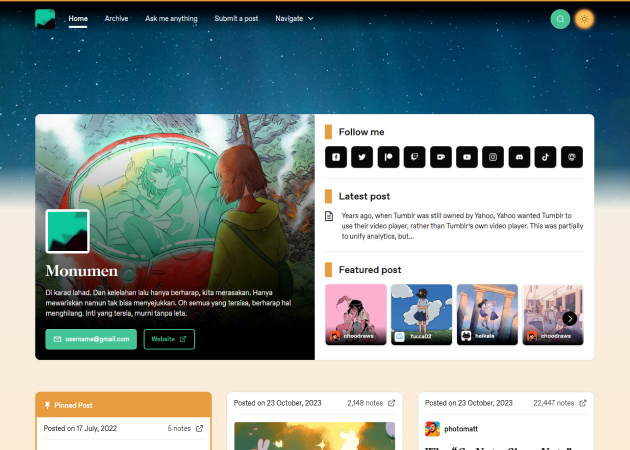
Premium · $9
Monumen
A personal theme that doesn’t box you in. Monumen works for any blog type, with a layout toggle that shifts from a clean single-column view to a photo-ready grid — ideal if you’re showcasing work, photography, or just want your blog to look like it means business.
GMOOC (Gamified Massive Open Courses)
An open online course platform using a gamification approach. Gamification provides an opportunity for the learner to master the available quests interestingly and interactively.
AgentPoint+ (Reapit)
A widely used WordPress real estate plugin and themes, focusing on the WordPress Gutenberg development project.